
Which Countries Visit Kerala for Medical Tourism? (2026 Complete Guide)
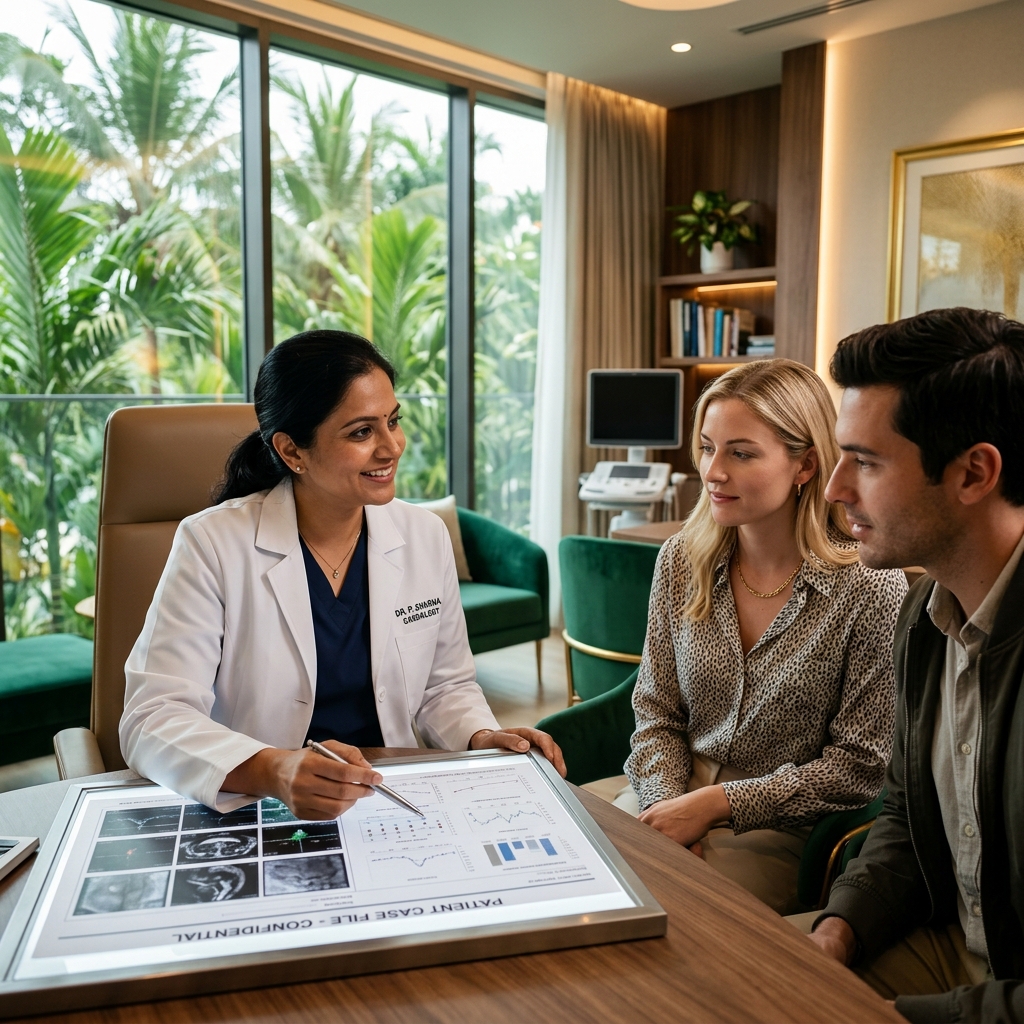
The top countries visiting Kerala for medical tourism in 2026 are: (1) GCC nations — Oman, UAE, Saudi Arabia, Kuwait, and Bahrain — for cardiac surgery, orthopedics, and oncology; (2) The Maldives, whose citizens travel to Kochi under the national Aasandha health insurance scheme; (3) European and Western nations (UK, Germany, France, Switzerland, USA) for Ayurvedic Panchakarma wellness and elective surgeries; and (4) African nations for affordable specialist care unavailable locally. Kerala attracts these patients due to direct short-haul flights, world-class JCI/NABH-accredited hospitals, significant cost savings of 60–80% versus Western prices, and strong cultural sensitivity including Arabic-speaking coordinators and halal facilities.
Kerala has firmly established itself as one of Asia's premier medical tourism destinations. Each year, tens of thousands of international patients choose Kerala's hospitals and wellness retreats over destinations in Thailand, Turkey, or Singapore — and the reasons are compelling: world-class JCI and NABH-accredited hospitals, treatment costs 60–80% below those in Western countries, direct international flight connections, and a healthcare ecosystem that blends ultra-modern medicine with authentic Ayurvedic recovery programs.
But which specific countries send the most patients to Kerala — and why? This guide breaks down every major patient nationality group traveling to Kerala in 2026.
1. The GCC & Middle East — Kerala's Largest Patient Group
Top countries: Oman, United Arab Emirates, Saudi Arabia, Kuwait, Bahrain
Gulf Cooperation Council (GCC) nationals consistently represent the single largest group of international medical tourists arriving in Kerala. The primary driver is straightforward: Kerala is geographically the closest world-class medical hub to the entire Arabian Peninsula. Direct flights connect Calicut International Airport (CCJ), Kochi (COK), and Trivandrum (TRV) to Muscat, Dubai, Abu Dhabi, Riyadh, Doha, and Kuwait City — most under four hours.
GCC patients primarily travel to Kerala for advanced allopathic procedures that are either prohibitively expensive or carry long waiting lists in their home countries:
- Cardiac Surgery (bypass grafting, valve replacements, angioplasty)
- Orthopedic procedures (knee and hip replacements using FDA-approved titanium implants)
- Oncology (chemotherapy, radiation therapy, complex tumor surgeries)
- Urology and Nephrology (kidney stones, prostate surgery, dialysis options)
Beyond the clinical excellence, cultural compatibility is a decisive factor. Top hospitals in Kozhikode (Calicut) such as Aster MIMS, Baby Memorial Hospital, and Meitra Hospital offer dedicated international patient wings staffed with Arabic-speaking medical coordinators, halal-certified food, in-room prayer facilities, and prayer call schedules. TreatInKerala provides Arabic language support throughout the patient's entire journey — from the initial consultation through to discharge and follow-up.
Cost advantage: A cardiac bypass surgery in Kerala costs approximately $6,000–$10,000 at a JCI-accredited facility, compared to $28,000 in the UAE or over $40,000 in the UK private sector.
2. The Maldives — A Consistent, Structured Patient Stream
Top country: Republic of Maldives
The Maldives occupies a uniquely consistent position in Kerala's medical tourism map. Maldivian nationals travel almost exclusively to Kerala — particularly to the city of Kochi — for a structural reason: *Aasandha*, the Maldivian government's universal health insurance scheme, has formally empaneled numerous private hospitals in Kerala as approved treatment centers. This means Maldivian patients receive treatment that is either fully or substantially covered by their national insurance in Kerala's hospitals.
The fundamental constraint driving this is the Maldives' own healthcare infrastructure. Being a small island nation spread across 1,200 islands, the Maldives lacks the facilities for complex multi-specialty procedures such as cardiac surgeries, neurological interventions, advanced orthopedics, or pediatric intensive care. Kerala, reachable via a short two-to-three-hour flight from Malé, serves as the effective tertiary referral healthcare system for the entire country.
This creates a steady, year-round flow of Maldivian patients — from straightforward specialist consultations to complex surgical admissions — many of whom travel with family companions for extended hospital stays.
3. Europe & Western Nations — Wellness and Elective Surgery
Top countries: United Kingdom, Germany, France, Switzerland, United States
Western patients arriving in Kerala fall into two distinct categories, each motivated by different healthcare needs.
Category A — Ayurvedic Wellness Seekers: The largest Western demographic visiting Kerala is drawn not by urgent medical need but by the desire for authentic, medically-supervised traditional healing. Kerala is the birthplace of Ayurveda and remains the global gold standard for authentic Ayurvedic treatments. Western visitors — often executives, professionals, or patients managing chronic conditions — travel for structured *Panchakarma* detoxification programs (typically 14–21 days), stress management retreats, arthritis management protocols, and deep metabolic reset programs. These programs are administered at government-certified wellness centers under qualified Ayurvedic doctors (Vaidyas), a level of authentic clinical rigor impossible to replicate in Europe.
Category B — Cost-Driven Elective Surgery Patients: A rapidly growing segment of UK, US, and European patients travel to Kerala to bypass the twin problems of high costs and long waiting times in their home healthcare systems. Joint replacements, dental implant procedures (full arch zirconia implants), cataract and LASIK eye surgeries, and IVF fertility treatments all represent significant wait times and private costs in the NHS or US insurance system. In Kerala, these procedures are completed in weeks at a fraction of the price — using the same US FDA-approved implants and materials — with no loss of clinical quality. A full arch dental implant procedure costing £25,000+ in London, for example, can be completed in Calicut for approximately $2,000–$3,500.
English is universally spoken by Kerala's clinical and administrative staff, removing the language barrier that makes destinations like Thailand or Turkey more challenging for Western patients.
4. African Nations — Access to Specialist Care
Top countries: Nigeria, Kenya, Sudan, Ethiopia, Somalia, Tanzania
Patients from across the African continent represent a growing and significant segment of Kerala's international patient base. The fundamental driver is access: many African nations lack the specialized medical infrastructure needed for complex procedures such as cardiac surgeries, advanced oncological treatments, organ transplants, and complex neurological interventions.
For these patients, Kerala offers a practical combination of high clinical standards, reasonable costs, and flight accessibility (with connections through Gulf hubs like Dubai, Doha, and Muscat). Nigerian and Kenyan patients in particular are a consistent presence at Kerala's major referral hospitals. Many arrive on medical visas with their families for extended treatment periods covering chemotherapy cycles, post-transplant recovery, or multi-stage orthopedic rehabilitation.
The affordability factor is critical: procedures at JCI/NABH-accredited hospitals in Kerala represent significant savings versus private hospitals in South Africa or the expensive care available in European or American medical facilities.
Why Kerala Specifically? Common Factors Across All Groups
Regardless of nationality, patients across all groups cite common reasons for choosing Kerala over other medical tourism destinations:
1. JCI & NABH Accreditation — International safety certifications that eliminate trust concerns
2. Direct Flight Connectivity — Calicut, Kochi, and Trivandrum airports connect to GCC, African, and European hubs
3. Cost Savings — Consistently 60–80% lower than equivalent care in the UK, USA, or UAE
4. Cultural Sensitivity — Halal food, Arabic coordinators, multi-faith facilities, and patient-first communication
5. Integrated Recovery — The unique availability of Ayurvedic post-operative rehabilitation alongside modern surgical care
6. No Waiting Lists — Treatments scheduled within days, not months
Kerala's rise as a global medical tourism hub reflects a carefully built ecosystem — one where clinical excellence, cultural warmth, and affordability converge in a way that no other destination has fully replicated.
Doctor-Curated Recovery & Herbal Essentials
Triple Strength Omega-3 EPA & DHA Fish Oil
Sports Research / Solgar
Pharmaceutical grade molecularly distilled fish oil for arterial flexibility and lipid balance.
Organic KSM-66 Ashwagandha (Full Spectrum Root)
Organic India / Doctor's Best
Authentic Indian adaptogen for cortisol regulation, adrenal recovery, and deep vitality.
Glucosamine, Chondroitin, MSM & Hyaluronic Acid
Doctor's Best / Solgar
Targeted joint lubrication and cartilage regeneration after knee or hip arthroplasty.
Need details for your condition?
Share your records with our panel doctors and receive a free estimate within 48 hours.